The quick answer
- EV charger installation cost starts at the panel, where available electrical capacity determines whether added work is needed.
- Wiring distance, finished walls and a detached garage affect the labor and materials needed to reach the parking space.
- Charger selection, outdoor mounting requirements and applicable permits and inspections also shape the installation scope.
Panel Capacity and the Route to Your Parking Space
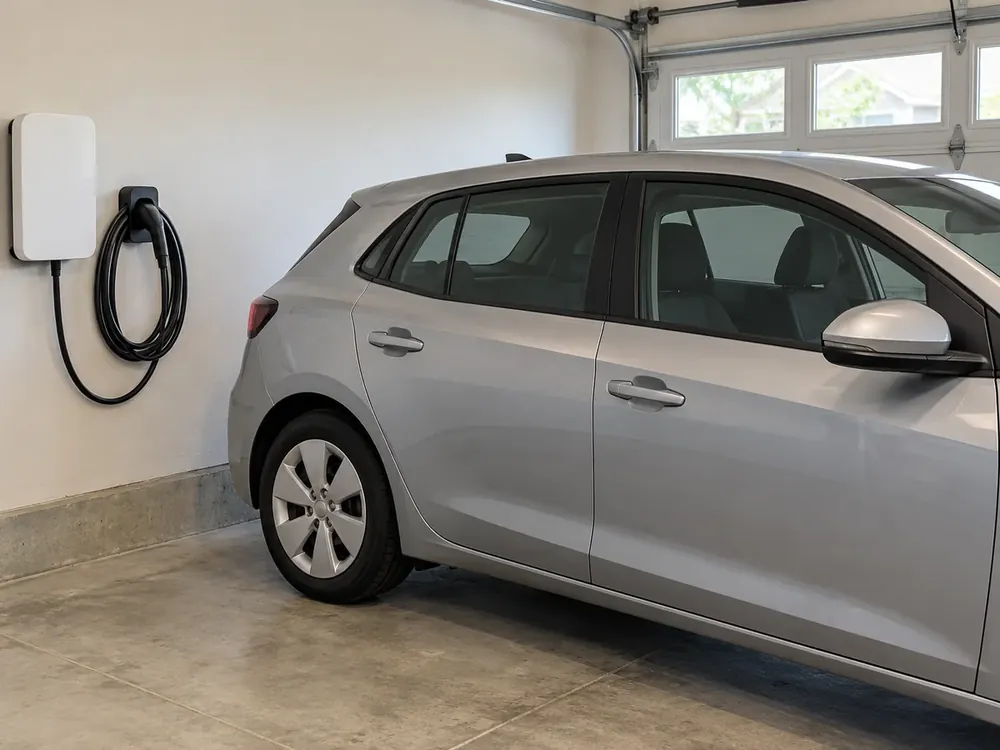
EV charger installation cost at home depends on available electrical capacity, the route to the parking space and the charging equipment selected. Call to discuss where you park and your charging needs; your technician will assess the electrical work those choices require.
Panel Capacity Sets the Starting Point
The panel assessment determines whether the existing electrical system can support the proposed charger. Space for a breaker and capacity for another sustained load are separate considerations. Your electrician checks the service, existing household loads and the charging level being considered.
An upgrade may be needed, but it isn't an automatic part of every charger installation. Ask your technician to explain whether the proposed scope includes a new circuit alone, equipment changes or a larger service project. A clear explanation prevents a wall-mounted unit from being mistaken for the entire job.
Wiring Distance Changes Labor and Materials
A longer route from the panel to the charger generally means more wiring and installation work. An accessible route through an unfinished space differs from one passing through finished walls. The plan should identify wall openings and whether patching and painting are included.
A detached garage can add trenching, underground routing and surface restoration. Your electrician assesses the garage's existing supply rather than assuming a nearby outlet supports the planned charging load. Share the parking location during the call; no measurements or panel inspection are needed from you.
| Installation detail | Effect on the scope |
|---|---|
| Panel near the parking space | Shorter wiring route with fewer obstacles |
| Finished rooms along the route | More access work and possible finish repairs |
| Detached garage | Assessment of existing supply and possible trenching |
| Outdoor parking | Equipment suited to outdoor use and protected routing |
| Hardwired or plug-in unit | Different connection equipment at the charging point |
The Charging Point Needs a Suitable Connection
Hardwired and plug-in chargers need connection arrangements suited to the equipment and circuit. A plug-in unit uses a compatible receptacle; a hardwired unit connects directly to its supply wiring. Your technician determines the appropriate protection and connection rather than relying on the appearance of an existing outlet.
Outdoor mounting also affects equipment selection. The U.S. Department of Energy's home charging page specifies outdoor-rated equipment for outdoor installations. Cable reach and a storage position that keeps the cable out of the vehicle's path belong in the layout.
The Electrical Safety Foundation International advises against extension cords or multiplug adapters for EV charging and says damaged chargers shouldn't be used. Call about a connection that reaches your parking position safely.
Charging Level and Features Affect Equipment Choice
Level 1 uses a standard 120-volt connection, while residential Level 2 uses 240 volts and supplies charging at a higher rate, as described by the Department of Energy. Your daily driving and time parked help establish which charging arrangement fits.
The charger itself is also a purchase decision. Connection type, cable length, scheduling features and vehicle compatibility can affect the choice. Tell your technician if you already have equipment or are considering a model, so the circuit design accounts for its requirements.
Alton Permits and Utility Programs Affect Planning
Permit and inspection work should be identified alongside the circuit installation. Alton's Code Enforcement Department lists electrical permitting and electrical inspections among its responsibilities in Alton, Illinois. Your electrician identifies the steps applicable to the proposed work.
For eligible Ameren Illinois customers in Illinois, ChargeReady offers Level 2 charger and installation incentives with household, community or individual eligibility criteria. The program also requires a single-family home and enrollment, or willingness to enroll, in ChargeSmart. Ameren says ChargeReady isn't available to Missouri customers. Discuss program participation during planning; an incentive shouldn't be assumed in the installation price.
The Installation Scope Connects the Cost Factors
EV charger installation cost near Alton reflects the actual route and electrical work at the property. Ask for a scope that distinguishes the charger purchase, circuit installation, any panel work, permits and surface repairs.
A local electrician in our network will describe the work and its price so you can decide before installation starts. Call about home EV charger installation to discuss your vehicle and parking space while equipment selection is still open.